When we look at the history of Black philanthropy, culture, and activism, we see its roots throughout all facets of the diaspora. We see hallmarks of our shared traditions through holidays like “Kwanzaa”, a borrowed word from Kiswahili which signifies the start of something new. We see it within the intricate hairstyles found in Black communities across the globe, a signifier of our varied culture and a symbol of colonial resistance. We hear it within our own neighborhoods, with brothers and sisters that have different pasts and different mother tongues. Despite the differences that make us unique, despite the cultures that shape our identities, we are all linked in our shared history fighting for liberation.
How local resistance sparked global shifts:
In 1804, Haiti became the first enslaved community to rise up against colonialism and grab a hold of their freedom. As the first free Black republic, their revolutionary victory created a spark that lit imaginations across the diaspora. Despite colonial powers working to suppress Haiti’s victory, their truth persisted.
In 1970, Angela Davis was placed on the FBI’s Top Most Wanted Fugitives list in an effort to suppress one of the most prominent Black liberation leaders of the moment. Her arrest and eventual escape sparked movements across the globe, with women from London to South Africa calling for her emancipation, and replicating her signature afro, which became a symbol for Black pride and resistance.
After decades of activism, 1994 marked the end to apartheid in South Africa. What started out as Black South Africans like Nelson Mandela fighting for their freedom became a global movement, with leaders across the world— from Coretta Scott King to Kwame Nkrumah—actively protesting for the liberation of their brothers and sisters.
Today, we still see Black communities fighting for each other across international boundaries. Countries rose up and protested in 2020 against the murder of George Floyd. Young activists are speaking up about the atrocities in places like Sudan, Congo, and Haiti. Communal networks are being set to help support our neighbors across the street, and our relatives across the world. Despite our different languages, our different customs, our different religions—we know that none of us are free until all of us are. So we continue to stand up, speak up, and fight.
Sankofa Now: Remember. Reclaim. Rise
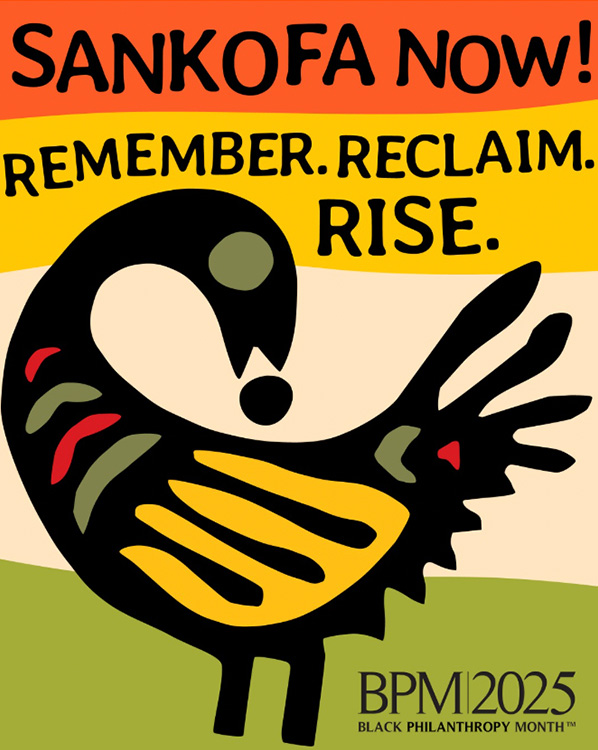
This year’s theme, “Sankofa Now! Remember. Reclaim. RISE.” calls on us to honor our commitment to each other. We can do this by: Sharing space together so that we can connect and grow in tandem, learning each other’s histories, stories, and struggles, and investing in Black and diasporic communities.
By pulling from the wisdom of our pasts, reclaiming the unique traditions of our ancestors, and collaborating across cultural lines, we can co-create a future where all our communities thrive. It is only when we rise up together, that we will reach true liberation.